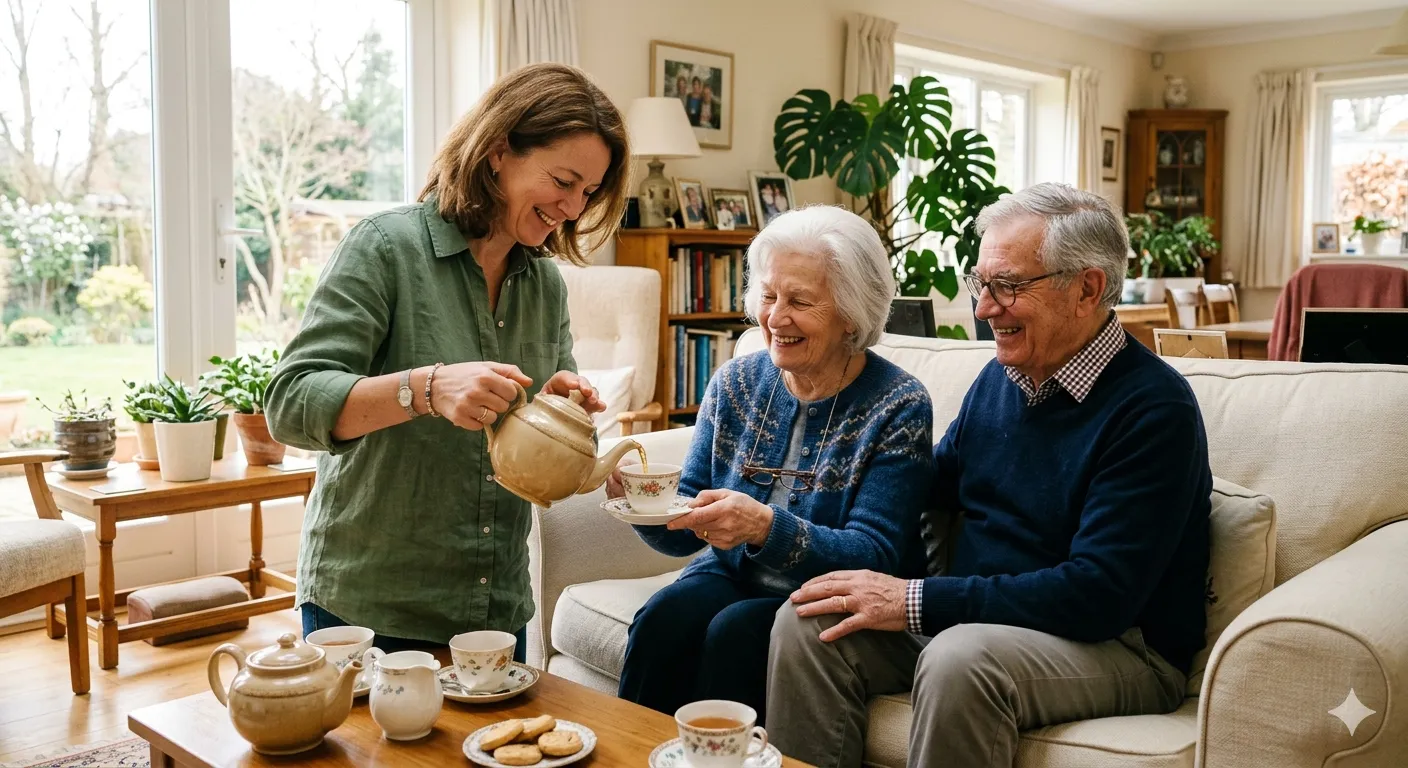
Do you spend your evenings at an elderly parent’s home, manage your partner’s medication or your mother’s medical appointments? You may be a carer without realising it.
In France, between 8 and 11 million people support a vulnerable relative. It is an essential role, but an exhausting one. The good news: 2026 brings a set of increases and little-known rights designed to support you.
What actually changes on 1 January 2026
No revolution, but some useful adjustments:
-
An increase in social benefits (to keep pace with inflation).
-
A stronger framework for home care and palliative care (the May 2026 law), which gives family carers a fuller place.
The 3 key schemes to know about
1. The AJPA (French daily carer’s allowance)
It compensates for lost income if you reduce or stop working.
-
A maximum of 66 days per person cared for (up to 264 days in total across 4 different relatives).
-
Open to employees, public-sector staff and the self-employed (subject to the relative’s level of dependency).
2. Carer’s leave
-
3 months, renewable, which can be split into periods or taken part-time.
-
No minimum length of service required in the private sector. Request it in writing from your employer (1 month in advance).
3. The right to respite (often overlooked)
To take a breather without feeling guilty:
-
Day care, temporary accommodation, in-home relief care (“baluchonnage”) or overnight care.
-
Possible funding through the APA (French personal autonomy allowance) (2026 respite allowance: up to €583.52, subject to conditions).
Support that too few people know about
Don’t miss out on these:
-
APA at home: funds professional help to lighten your daily load.
-
Pension funds: some offer services or financial support.
-
CLIC, CCAS, respite platforms: free guidance and referral close to home (CLIC = local information and coordination centre for older people; CCAS = municipal social action centre).
How to avoid burnout
Watch out for these warning signs:
- Persistent fatigue, isolation, guilt, giving up on your own leisure time.
The first form of help is talking about it: to your doctor, a social worker or a respite platform. Taking care of yourself is also taking care of your relative.
Any questions? Visit service-public.fr or contact your local CCAS.
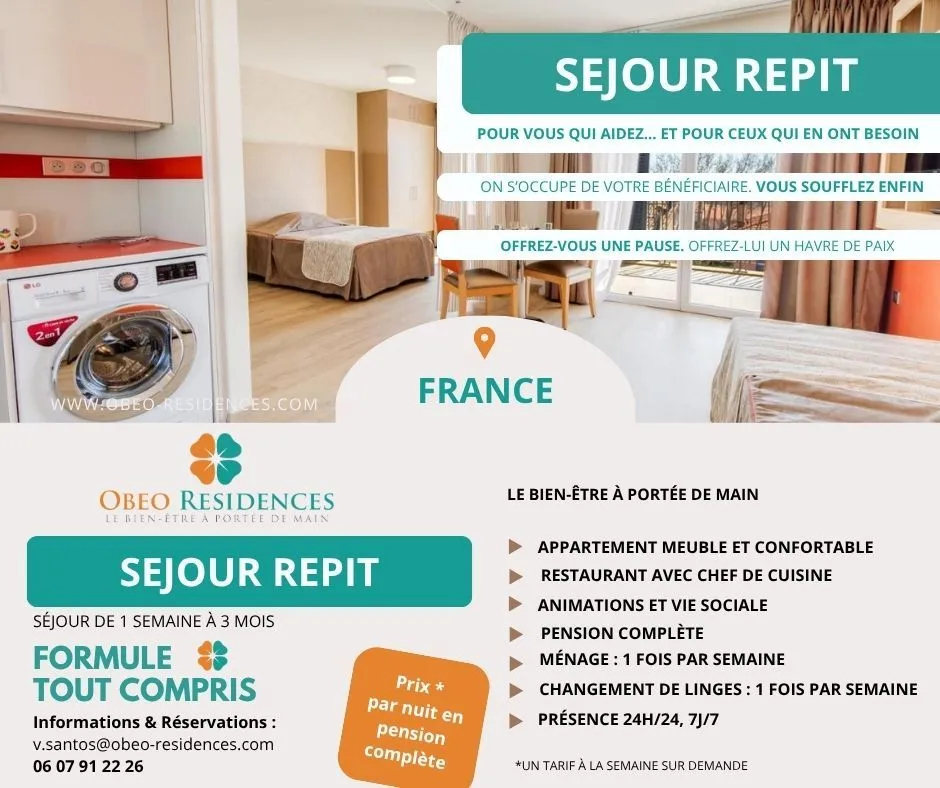
OBEO Résidences offers a RESPITE STAY for carers and the people they care for in our senior services residences across France.