
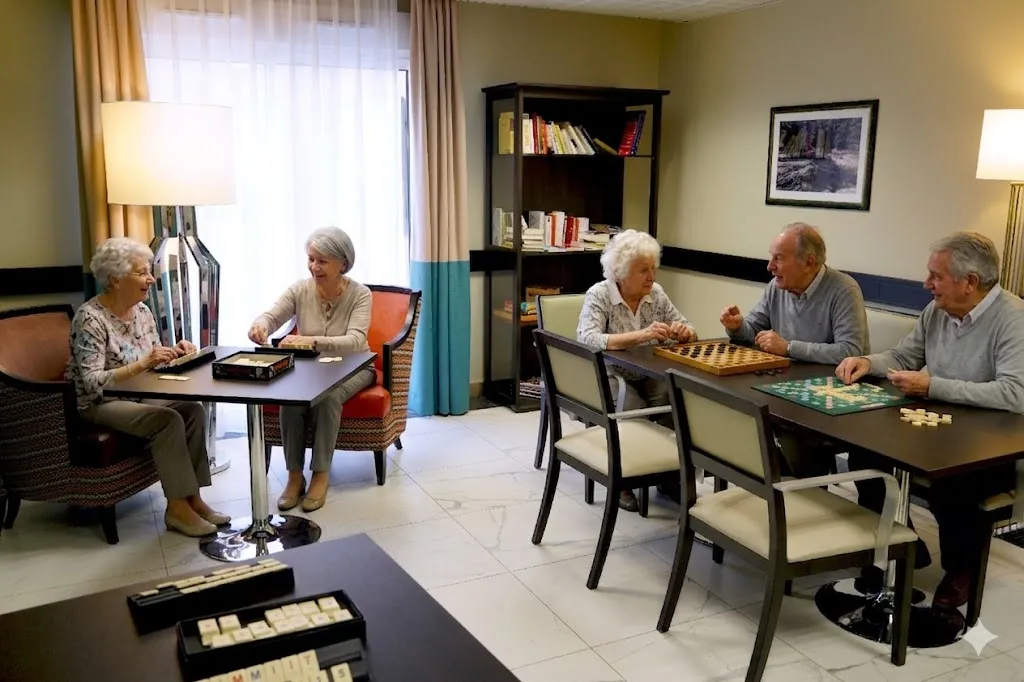
Good news: your memory can stay active at any age. And there is no need to make it complicated. A memory game for seniors can help you work on your attention, your concentration and your recall. The point is not to succeed at all costs, but to practise while having fun.
Games, simple exercises, routines, complementary activities, warning signs to watch for: here are easy pointers to move forward at your own pace.
Why and how to play memory games after 60?
After 60, your brain likes three things: regularity, variety and enjoyment. There is no need to spend an hour on it. A few minutes a day is enough to build a useful habit.
Stimulating the brain regularly
A word game, a riddle or a few cards stimulate your attention and your cognitive memory. Your brain remains capable of learning, even as you age. This is what is known as brain plasticity. Keeping it going depends a great deal on regularity.
The ideal approach? Create a small appointment that is easy to keep:
-
A riddle after your coffee
-
A few crosswords during the morning
-
An exercise on a tablet in the late afternoon
A few minutes are enough, as long as you come back to it often.
Keeping your memory sharp for the little things in daily life
Memory games help with very simple everyday actions:
-
Remembering the 3 items to buy at the bakery
-
Following a recipe without re-reading every line
-
Remembering where you put your glasses
-
Picking up the thread of a conversation after an interruption
These small exercises maintain reflexes that help you stay independent for longer.
Moving, talking, observing: your memory likes that too
Memory games become more motivating with other people. Invite a family member or a neighbour for a short round. In a senior residence, memory workshops and group games create warm, sociable moments. That social connection stimulates attention, language and the desire to take part.
Your memory also works when you move. On a walk, memorise the names of 3 streets, spot 5 flowers, count the benches along your route.
Which memory games and exercises should you choose?
Choose an activity you enjoy and that suits your energy in the moment. The most important thing is wanting to do it again.
For visual memory: cards, pictures and puzzles
Place 5 objects on a table. Look at them for 30 seconds. Cover them, then name as many as you can. You can also study a photo, close your eyes, then describe the details. Playing cards, the Memory game or jigsaw puzzles with large pieces are also good options.
For verbal and auditory memory: words, songs and stories
A few crosswords, a mental shopping list (bread, apples, yoghurt, coffee), or a chorus you know well. Tell a memory out loud. Music can also bring back memories and soothe the mood.
For logic and concentration: grids, quizzes and riddles
An easy sudoku grid, a few simple calculations, a quiz or a riddle will do. You can also sort words into categories: fruits, cities, professions, animals. Or play twenty questions.
For staying connected: board games and simple apps
Dominoes, belote, tarot, bridge, draughts or chess all call on attention, strategy and recall. On a tablet, some apps adjust the difficulty according to your answers. Handy, as long as the screen stays legible and the app is simple to use.
Memory games suited to different profiles
The same game does not suit everyone. The right game is the one that stimulates you without discouraging you.
For an independent, active senior: vary the difficulty levels. Alternate between strategy games, logic grids, short quizzes and group workshops.
For a senior with mild cognitive impairment: favour games that are easy to pick up, with one instruction at a time. Large cards, clear images. Familiar games are reassuring: dominoes, bingo, word searches, Happy Families.
For a person living with Alzheimer’s disease: France Alzheimer recommends simple, familiar games: picture bingo, sorting cards by colour, 12 to 24-piece large jigsaws, songs to complete, family photos to talk about. Keep sessions short (10 minutes), calm, with a single instruction at a time. The aim is the exchange, not the result.
Beyond games: other activities that support memory
Reading, writing and learning: read, then summarise the main idea. Keep a memory notebook. Learn a poem, a few words of English or the lyrics of a song.
Creating and working with your hands: watercolour, collage, knitting, gardening, modelling. These activities call on concentration and the pleasure of making something.
Sleep, nutrition and health monitoring: after a bad night, concentrating becomes harder. Drink water, keep to regular mealtimes. Sight and hearing matter too: if you do not hear an instruction properly, you will not remember it.
When should you seek advice about memory problems?
An isolated lapse does not mean illness. Forgetting a first name and then recalling it, hunting for your keys, walking into a room without knowing why, these small lapses are common, particularly during periods of tiredness or stress.
Signs that warrant medical advice:
-
Lapses happen often and complicate your daily life
-
You miss several appointments
-
You can no longer find your way in a familiar place
-
You struggle to follow a conversation or manage your paperwork
-
Words no longer come, dates get mixed up
Who should you turn to?
Speak to your GP first. If needed, they can refer you to a neurologist, a geriatrician or a memory clinic. Asking for advice does not mean there is a serious illness. It also helps rule out fatigue, a nutritional deficiency, reduced hearing or a side effect of a medication.
In summary
A memory game for seniors should stay simple, enjoyable and regular. You do not need to be good, fast or unbeatable. To support your memory, rely on three pillars:
-
Games suited to your energy and your interests
-
Social connection to share and exchange
-
Regular health check-ups to take stock without worry
So, ready to bring out the cards, the crosswords or that old puzzle sitting in the cupboard? Your memory will thank you, one small exercise at a time.
In a senior residence, do ask the activities team whether memory workshops are organised. It is a chance to have fun together while looking after your brain.